



Crypto and blockchain have been challenged by the long list of myths that have emerged mainly because people lack sufficient understanding of how the technology genuinely functions. Here are some of the most popular myths in the crypto space and why they are believed.
1. Criminals use crypto to avoid detection

Crypto has many kinds of coins, beyond Bitcoin, platform tokens such as Ether (ETH), and specialized coins such as memecoins or privacy coins. Privacy coins are built to keep transaction details under wraps.
Transactions inclusive of these coins can hide things like who sent the money, who got it (their addresses), how much was traded, and what the wallets hold. However, these coins don’t represent the whole crypto ecosystem.
The transparent nature of the blockchain makes Bitcoin or other similar coins a risky choice for criminals who want to avoid detection. Any transaction can be traced back to the user’s wallet address at the time of the transfer.
2. Bitcoin and other cryptocurrencies are worthless because they aren’t backed by physical assets or governments

The value of cryptocurrencies lies in the supply and demand. Being a decentralized cryptocurrency, BTC’s value is not determined or authorized by any centralized authority.
As any data fed on the blockchain is immutable and instantly verifiable, people who understand the technology trust it, despite the lack of centralized power. In such a case, the lack of centralized power changes from a bug to a feature.
The volatility and evolving regulatory landscape add a layer of uncertainty that makes true valuation of crypto assets a tough task. But real traders identify its potential before others.
3. The market is saturated, and the opportunity is gone. It’s too late to invest

Bitcoin has survived innumerable regulatory crackdowns, market crashes, and constant criticisms, followed by doubts. Its continued development and increasing institutional adoption suggest it’s far more than a temporary fad.
Trends faded, but crypto has endured; it is growing and expanding.
Most people hold the belief that early investors are the only ones who can profit from crypto, and the market has already reached saturation. However, the reality is that an increasing number of products and platforms continue to enter the industry with every passing year.
4. Bitcoin is too expensive for regular people—you need to buy a whole BTC
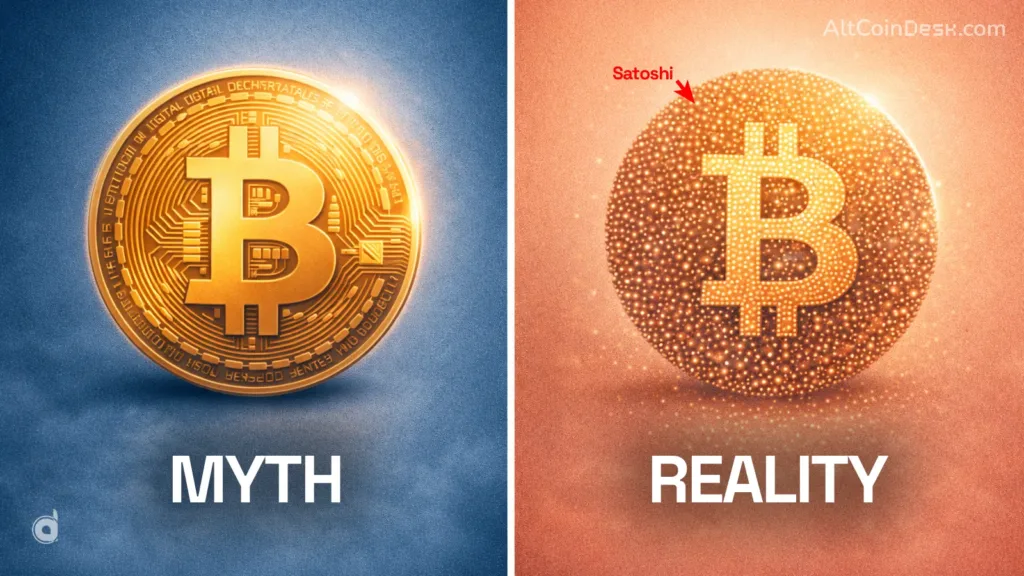
People judge the entire cryptocurrency market on the basis of Bitcoin’s price. A widespread misunderstanding is the belief that one must purchase a full Bitcoin instead of investing in a fraction of a Bitcoin (satoshi) or other coins.
5. Blockchain and Bitcoin are both the same thing

Blockchain is a technology, and Bitcoin is a digital currency built to run on the blockchain technology, making Bitcoin an application of blockchain, not the technology itself. These are two entirely different things. The operating system (Windows, Android, or iOS) is the blockchain technology, while the BTC is the application (Instagram, TikTok, etc).
But blockchain technology isn’t exclusive to the crypto world. In fact, some of its most promising and exciting uses are completely unrelated to Bitcoin or any other digital currency, such as supply chain management, real-world asset tokenization, and others.
6. Crypto is too complicated for regular users

The idea of crypto being too complicated for regular users comes from the extended use of crypto jargon amidst the crypto community. When the common people fail to identify them, they think crypto is only meant for people in tech and is too complicated for regular users. Don’t be fooled when people say “rug pulls” or “pump and dump.”
7. Cryptography is primarily used for illicit activities

2025 witnessed a loss in the range of $14 billion to $17 billion in crypto scams and frauds. Cases of money laundering and terrorist financing through crypto have been all over the mainstream media.
However, the crypto space is primarily used by ordinary people for a variety of financial decisions. Platforms like Binance, a cryptocurrency exchange that has over 120 million registered users for trading, investing in new projects, and essentially for cross-border remittance for low-cost international money transfers, show a visible concern with fiat currency exchanges.
Just like how every industry has both negative and positive aspects, crypto has gained an unwarranted bad reputation for illicit activities. But records indicate that such cases have reduced from 0.62% in 2020 to ~0.15% in 2021.
As the ecosystem matures, separating fact from fiction isn’t just helpful but essential. In the traditional fiat currency space, close to $800 billion to $2 trillion is laundered every year. However, these issues have become normalized due to fiat currency’s wide acceptance in everyday life. With the right regulatory frameworks in place, some form of crypto could be the currency of the future.