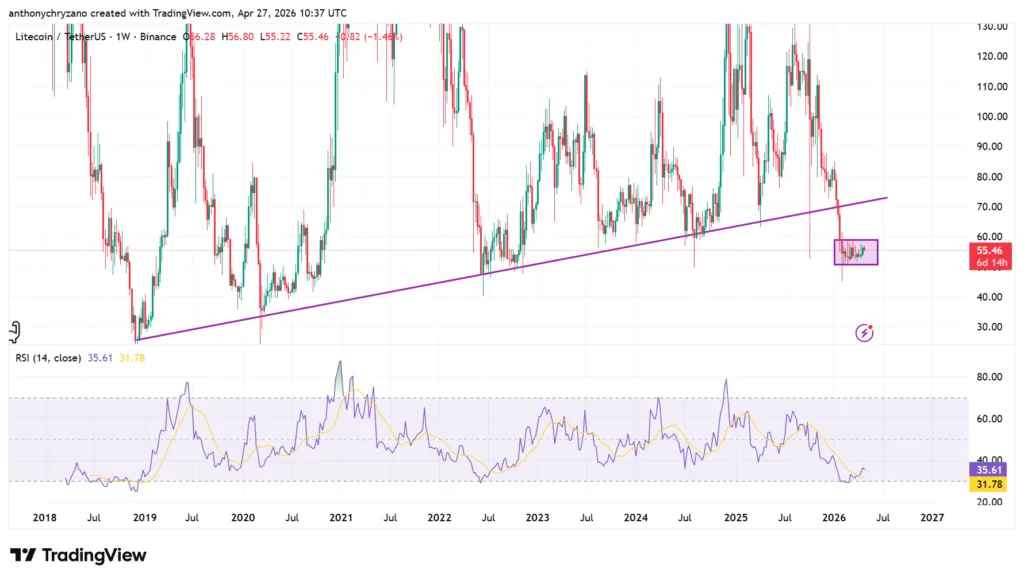



Litecoin (LTC) managed to consolidate despite a denial-of-service attack on its mining pools. A ‘zero day’ vulnerability hit the LTC network, which caused the reorganization of 13 blocks on its chain. While some developers say it was a zero-day attack, others stated that it was preplanned.
On Saturday, layer-1 blockchain network Litecoin came under a denial of service attack that leaked funds from the chain to third-party exchanges. Although the Litecoin development team calls this attack a ‘zero-day’ vulnerability, the others say the developers were aware of the loophole or the bug.
What is zero day?
A zero-day vulnerability is a security flaw in software that is unknown to the developer or vendor, which means there’s no fix or patch that is readily available for it. The name is derived from the idea of the number of days developers had to fix it in a certain number of days. “Zero days” here means that they did not have time to fix.
Here’s the logic in plain terms:
For instance, let’s say a bug exists in a system (like an app, website, or operating system). Before the team finds the bug, hackers exploit it. They can exploit and steal funds while everyone else is unaware. Since there is no immediate patch and developers had no time to work on it, it’s called a zero-day exploit.
A bug in Litecoin’s MimbleWimble Extension Blocks software made some updated mining pools vulnerable to a denial of service (DoS) attack, which overwhelmed them and reduced their hashing power.
At the same time, older versions of Litecoin nodes (that didn’t have the update) were still working normally. These older nodes were able to move coins to decentralized exchanges and cross-chain swap platforms.
This led to a problem: some of those transactions ended up being invalid, but they were still getting recorded on Litecoin (MWEB), which is its privacy layer.
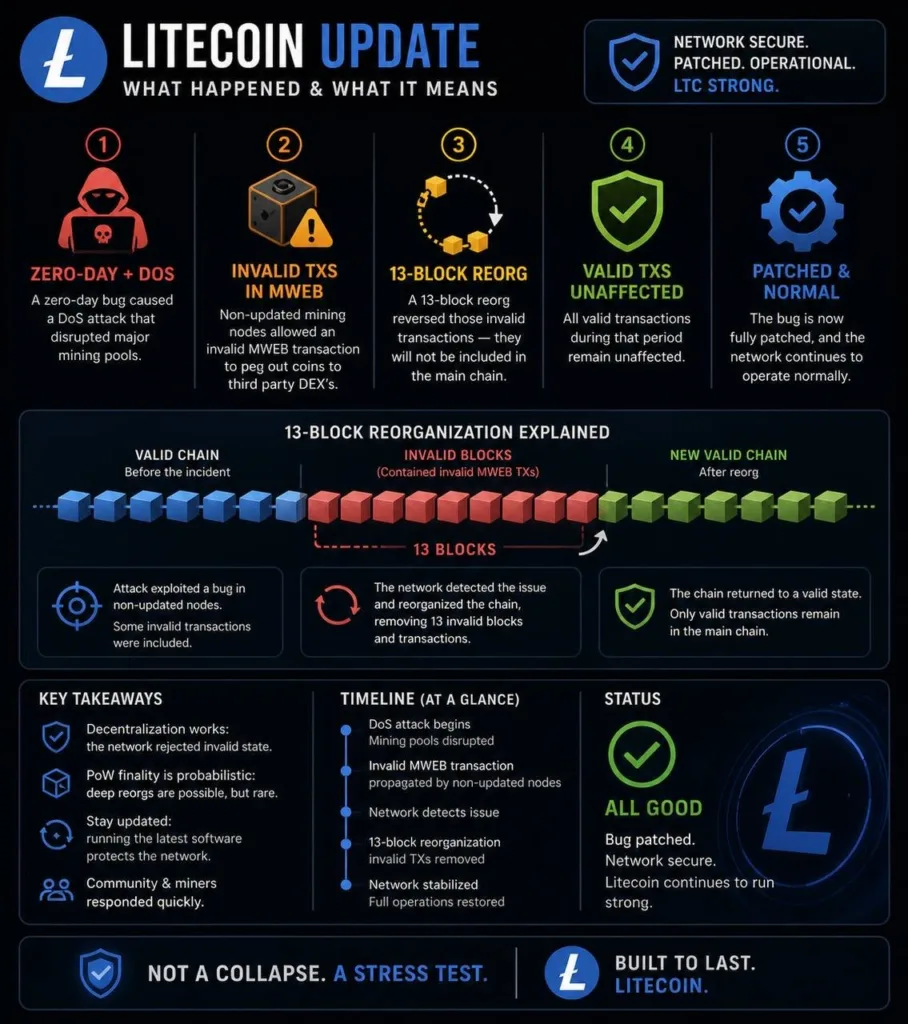
But the intriguing part of the story is that while the LTC developers say this was a zero-day attack, other developers say the attack was premeditated.
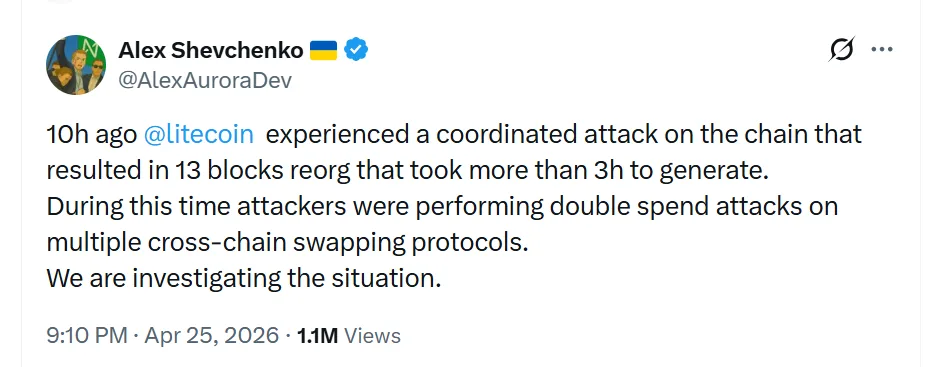
LTC team claim a zero-day attack but investigators say otherwise
Alex Shevchenko, an investigator, stated that this was not a zero-day attack, but rather a well-coordinated effort by an insider. Substantiating the fact the attack was orchestrated, he stated that as per the available information, the attacker’s game plan was to swap LTC into ETH on the 0xfF18652A84aAd4f99F464f6B58cE7Ad929F6Fc10 address, which was funded with Binance 38 hours ago.
In addition, he mentioned the “DoS attack was just putting nodes down to decrease the hashrate, and there was indeed the bug in the MWEB txs.” These two are different things. The MWEB bug is a protocol bug. DoS is just a way to exploit it.
What makes it more suspicious is how the protocol automatically handled the reorganization once DoS stopped (which is great), meaning that some portion of the hashrate was actually running an updated code.
The blockchain’s self-recovery and some miners’ use of the updated software suggest the issue was not new. Thus, this bug was known, and it’s not a zero-day.
Despite the DOS attack, LTC managed to maintain its trend of making higher lows, with the token currently priced at $55. Although the token is making higher lows, when the whole pattern is put into context, the token is trading inside a bear flag, which eventually breaks down.
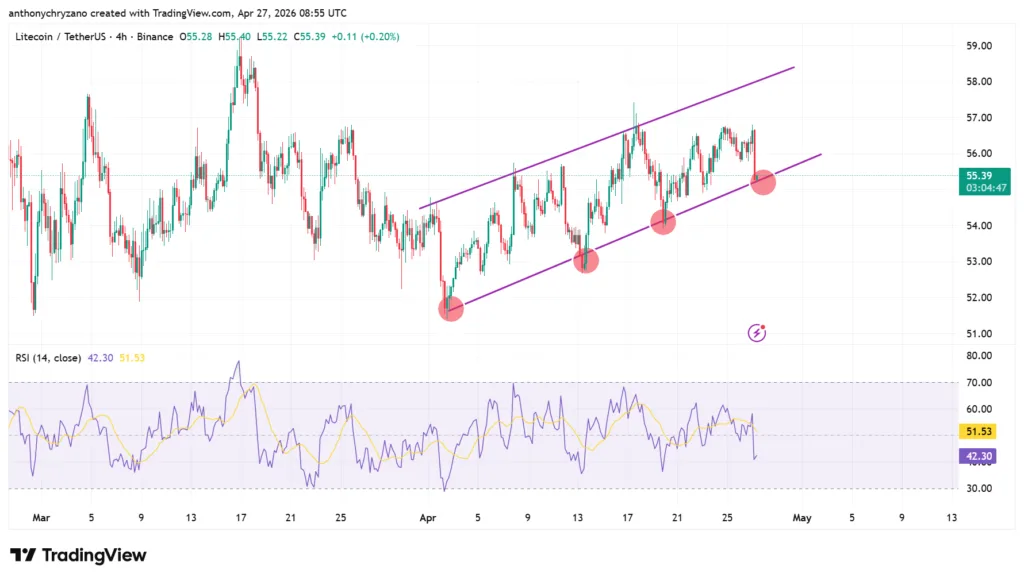
A bear flag is a continuation pattern that occurs within a bearish trend. The first part of a bear flag is marked by a steep decline, signaling strong bearish selling action, and is referred to as a “flagpole.” This is followed by a sideways movement or a slight price advance within a narrow channel, marking the formation of a “flag.”
It usually occurs as a brief interruption in the price trend, where sellers cash out their gains while buyers attempt to advance the price but with little success. Volume tends to be low at this stage. If the selling pressure rises again, then the price falls sharply below the flag and continues the initial bearish trend.
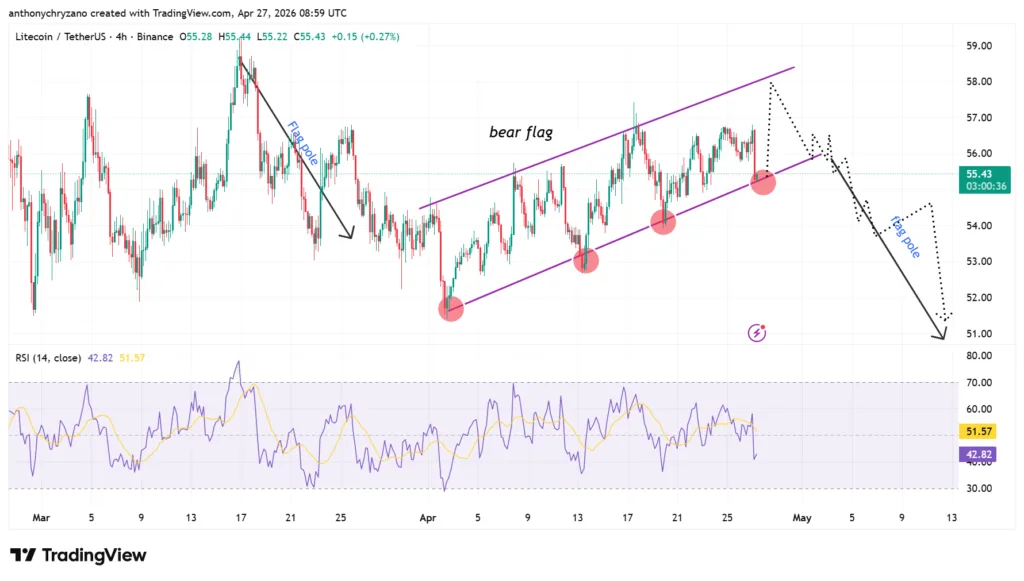
Once the bear flag is fully formed, the implication is that the prior downtrend may resume, meaning sellers could regain control after the brief consolidation. The case of Litecoin is no different since a breakdown from the chart pattern suggests that the previous support levels are now giving way to more downward price movement.
Round figures such as $50 have significance in the market since people usually use round figures as psychological levels. Orders are made at these points, causing a slowdown or stoppage in the downward trend. But with poor sentiments and confirmation of the bear flag with volume, there may be a test or breach of these psychological levels due to panic and stop-loss triggers. However, in the long time frame, the token is consolidating.