

SUI has been consolidating for the past three months, despite the broader market crash. Geopolitical tension, fear, uncertainty, and doubt shook the crypto market, with many coins crashing hard. However, SUI holding up and consolidating through all this trauma is quite impressive, says analyst and investor James.
SUI consolidates since February, while the broader market crashed
Since February, SUI has been consolidating, close to the $1 level, despite many unfavorable factors happening around the world.
With the rising geopolitical tensions in the Middle East, many investors turned away from crypto and moved their funds into commodities like gold and some others into crude oil. Despite all these migrations, SUI has been holding quite firmly while other cryptocurrencies have sunk into oblivion.
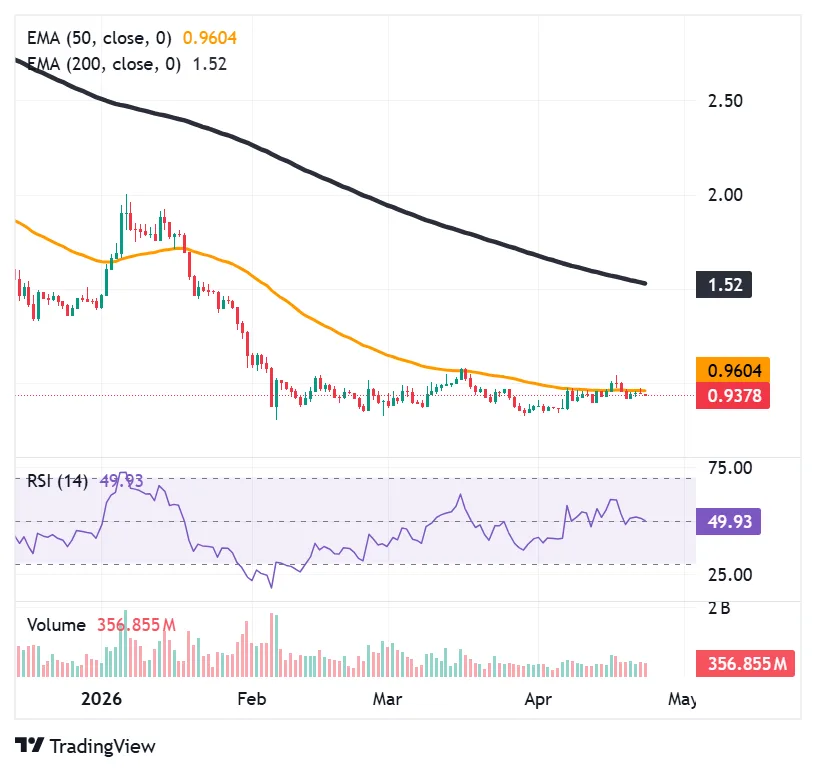
For instance, the chart above shows that SUI has been testing the 50-day moving average since the beginning of 2026. When SUI is “testing the 50-day moving average (MA),” it means the market has reached that level and is trying to decide whether to respect it or break through it.
In practical terms, the 50-day MA acts like a dynamic support or resistance zone. If price is above it and pulls back to test it, the market is checking whether buyers are strong enough to defend that level.
If the price holds and bounces, it usually signals that the trend remains bullish and that buyers are still in control. On the other hand, if price breaks below the 50-day MA and fails to reclaim it, it suggests weakening momentum and a potential shift toward a downtrend.
When price is below the 50-day MA and rallies up to it, the test works the opposite way. The level acts as resistance, and the market is testing whether sellers will step in again. A
rejection from this level often confirms continued bearish pressure, while a strong break above it can signal a shift in momentum toward recovery. The latter is what is actually happening with SUI, as it tested a few times but failed to recover this level.
SUI holds up despite the Volo protocol exploit
This consolidation comes in the wake of SUI’s liquid staking protocol being compromised for $3.5 million. Volo Protocol, the liquid staking platform on the Sui blockchain, suffered a $3.5 million exploit on Wednesday as attackers started to drain three vaults containing wrapped Bitcoin, tokenized gold, and stablecoins.
However, the protocol froze approximately $2 million of the stolen funds and pledged to absorb the losses itself, not passing them on to users.
This breach follows the massive $293 million hack of Kelp DAO just days prior, intensifying a severe security crisis within the decentralized finance (DeFi) sector, which has seen over $10 billion in cumulative losses from hacks and bridge exploits.
Although it looks like consolidating from a distance, it is not. When looking at the intricate details of the consolidation, it could be seen that the SUI is actually fluctuating inside a bear flag.
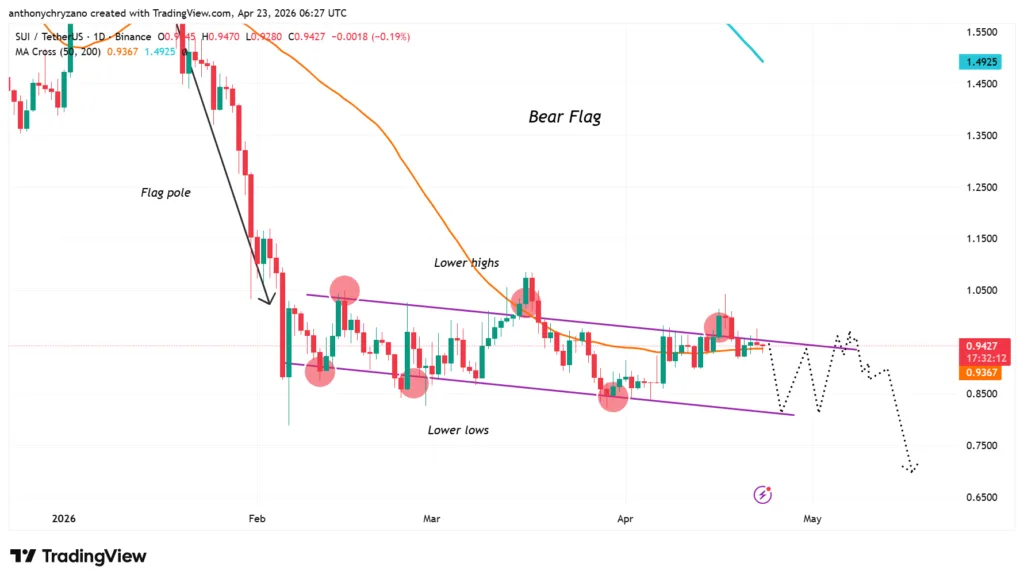
As shown in the chart above, it has been making lower highs and lower lows inside the flag. This bear flag is not natural, as a conventional bear flag makes higher highs and higher lows. In this context, the pattern is better understood as a descending channel or bearish continuation structure rather than a bear flag.
Because there is no meaningful recovery phase, the market doesn’t “reset,” which often leads to a more aggressive move when the breakdown eventually occurs.
In simple terms, while a standard bear flag reflects a weak bullish pause before continuation, this type of structure signals that there is no pause at all—only sustained bearish control, increasing the likelihood of further downside. As such, SUI may look very bearish on the charts.
However, it’s not the case considering SUI’s historic behavior at these levels. For instance, the chart below shows SUI trading inside a bear flag or descending channel back in 2024.
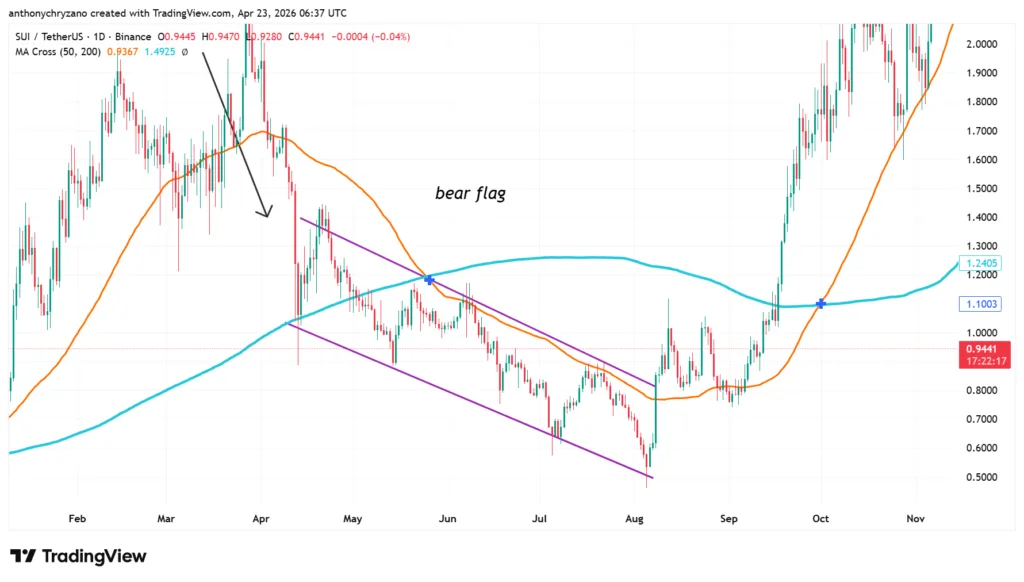
The breakout was very different from what should have happened technically. Rather than breaking down further, the prices broke out from the upper trendline of the flag. Since SUI is in similar condition right now, there is a high chance that the token could repeat this same behavior once again.