



Ethereum’s price has been stuck around the $2,000 level, but what’s happening underneath looks very different from the surface action. While volatility has cooled and momentum feels absent, on-chain data is showing a steady shift in who is holding ETH – and how long they’re willing to hold it.
ETH accumulation is quietly taking over
One of the clearest signals comes from realized capitalization among accumulating addresses. These are wallets that historically don’t sell too frequently, and they absorb supply during weak markets, rather than chase rallies.
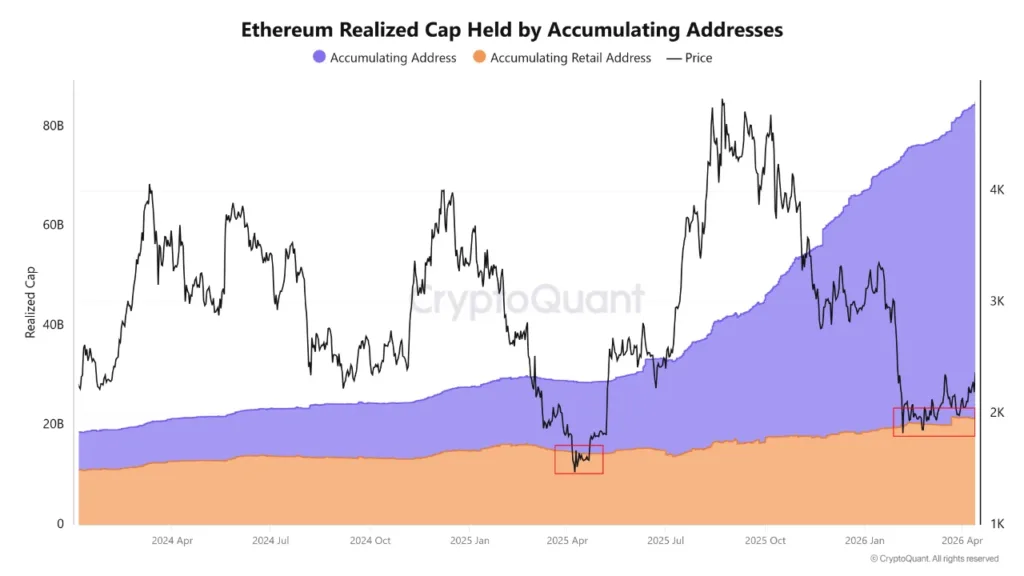
What stands out is how consistent this behavior has been since the April 2025 drawdown and through the most recent consolidation. Instead of distributing coins during volatility, these wallets have continued to add. That usually points to conviction rather than short-term trading interest.
In other words, dips are being used to build positions, not exit them. And that changes the character of the market over time, even if price doesn’t immediately respond.
Exchange flows are shifting too
The second piece of the puzzle is exchange behavior.
During the mid-2025 rally, inflows were led by high-frequency wallets – addresses that move in and out quickly – linked to trading activity and profit-taking near local tops. That kind of flow usually signals a more speculative phase of the market.
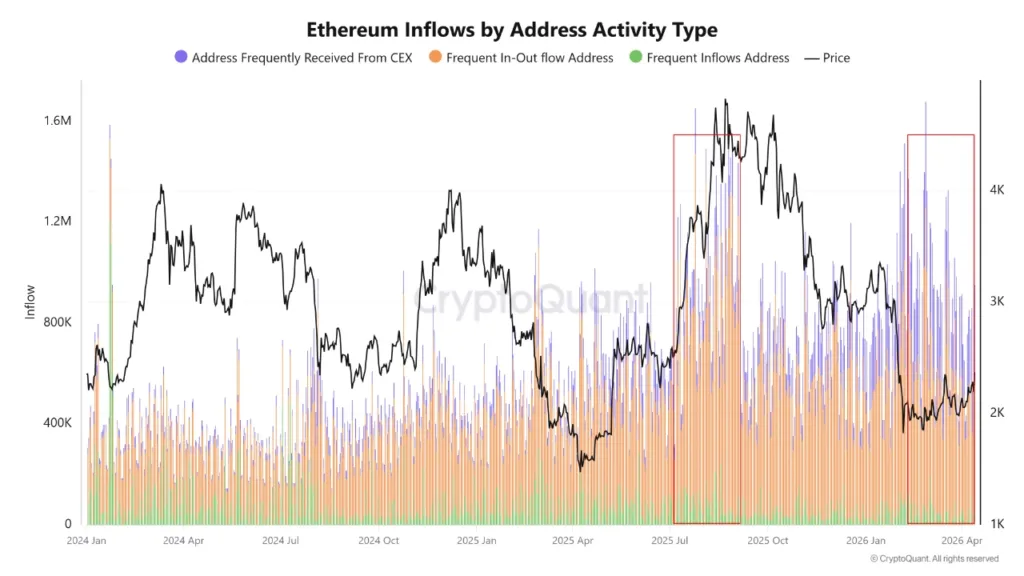
Now, that pattern is beginning to weaken. Instead, there’s been a gradual shift toward outflows from centralized exchanges, meaning more ETH is being moved into self-custody or longer-term storage.
That matters because it reduces immediate sell pressure. Coins sitting on exchanges are typically more “liquid” and ready to be sold, while coins that are moving off exchanges tend to be held with a longer time horizon.
At the same time, there are no signs of aggressive inflow spikes, which often appear when markets are overheating. This isn’t a rush of new speculative capital chasing price higher. It’s slower, more patient positioning.
The market feels early
Put together, the structure looks less like distribution and more like re-accumulation. Supply is being absorbed quietly, speculative flow is cooling, and more coins are moving out of active trading venues.
What makes this intriguing is the disconnect between price and positioning. Ethereum hasn’t broken out, and sentiment doesn’t feel particularly strong – but beneath that, the holder base is gradually shifting toward stronger, less reactive hands.
That kind of setup doesn’t always lead to immediate moves. But historically, when accumulation builds in low-volatility environments like this, it tends to matter later – once the market finally decides to move again.