


Capital is rotating and staying in the crypto market rather than exiting as market sentiment gets better. The funds are being rotated to a few specific DeFi protocols, and the stability of the total value locked would define the next winning protocols.
With the Fear and Greed index about to move to the greed zone, investors could be aggressively chasing after higher-yield offering protocols in the coming days.
As the sentiment of the crypto market is getting better, capital is being concentrated around a few DeFi protocols. Protocols such as $AERO, $BAL, $UNI, $CAKE, $PENDLE, and $GMX are experiencing shifts in liquidity after reaching peak levels.
The market sentiment could get greedy
The Fear and Greed index chart, which measures the overall sentiment of the traders in the market, is now edging closer to the greedy section of its scale. Showing a value of 58, the sentiment is about to cross over the neutral region and head over to the greed zone.
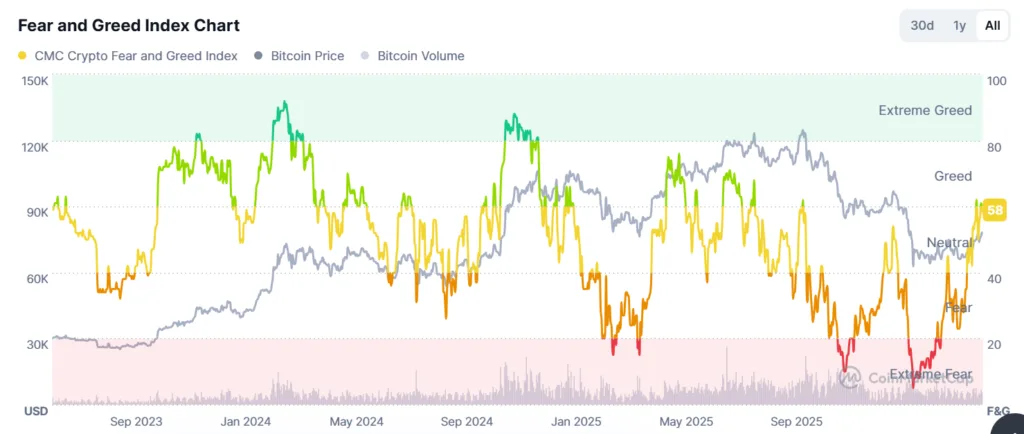
Once the Fear & Greed Index shifts into the “Greed” territory, it is typically indicative of an optimistic sentiment prevailing in the market. Investors tend to become more confident, and rather than being patient, they act proactively by buying heavily since they are fearful of missing any additional price appreciation.
It is quite common for momentum to build here as the asset prices rally and pullbacks are snapped up swiftly.
However, beyond all the euphoria, there is behavior modification happening under the hood. Risk appetites escalate, traders hold heavier positions, and leverage becomes prevalent. In other words, investors are no longer acting rationally, and they simply follow the trend until it lasts.
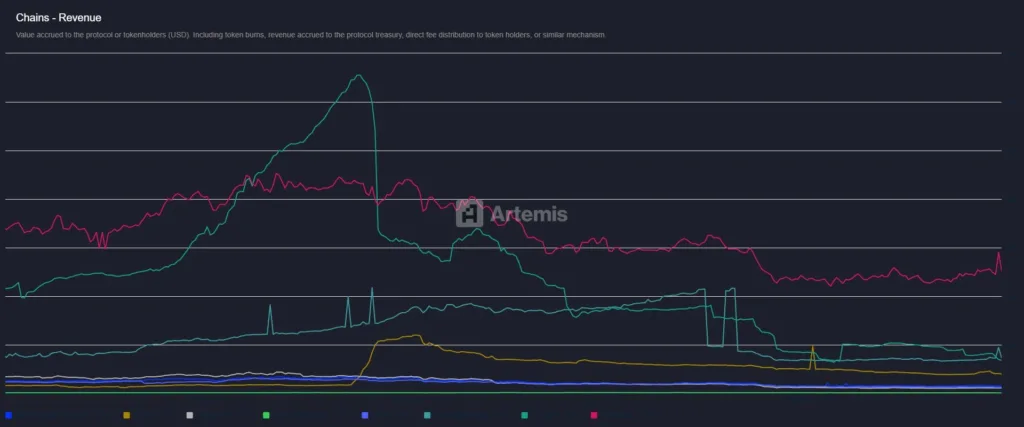
When DeFi protocols like Aerodrome Finance ($AERO), Balancer ($BAL), Uniswap ($UNI), PancakeSwap ($CAKE), Pendle ($PENDLE), and GMX reach their peak TVL levels, it means that there was an organic rotation of capital into the protocol rather than its exit from the DeFi space altogether.
When the hype is at its peak, a DeFi protocol attracts many liquidity providers; it could be because of high yields, good narratives, and dominant market positions.
However, later on, the influx of capital starts to reduce yields, which makes the investment less appealing for some liquidity providers. As such, bigger players leave the protocols when yields start to decline and look out for other protocols with higher yields where capital can be invested.
This phenomenon is referred to as “mercenary liquidity” in that the capital acts as mercenaries and goes wherever there is the highest pay, not necessarily with the intent of sticking around for a long time.
It also indicates the rotation stage where liquidity is present, though not increasing. Put another way, this indicates that there is more opportunism and less loyalty on the part of the participants.
Funds flow out of the protocol when the hype dies
When the hype or the narrative that fueled the price higher – such as perpetual trading, yield tokenization, or ecosystem-specific growth – starts to decline, investors look out for other options that offer higher yields in the market.
This behavior of investors indicates capital remains active in the ecosystem; its position is undergoing dynamic reallocation since investors will not settle for one protocol but will constantly try to identify another sector with greater profitability or momentum.
As greed takes hold in the market, capital becomes increasingly aggressive and impatient, moving from being idle to seeking out the best yields, incentives, or narratives.
Thus, TVL moving to select protocols such as Uniswap, GMX, or Pendle is likely driven by capital seeking the best short-term gains, rather than belief in these protocols.
To put it differently, this type of flow does not show any real commitment; capital will rotate into certain protocols due to high yields or strong narratives but will not hesitate to rotate out once something better comes along.