

The internet has shifted more than once, and what’s happening right now is one of the bigger transitions. Web3 is what comes after the version of the internet owned and controlled by a small group of tech corporations. In 2026, it’s no longer just a topic for developers and early adopters.
The best Web3 crypto projects in 2026 are building real products with real users behind them. Banks are testing blockchain settlements. Gamers are earning from in-game assets they actually own. For anyone who’s been curious but hasn’t known where to begin, here’s what’s actually going on.
What is Web3?
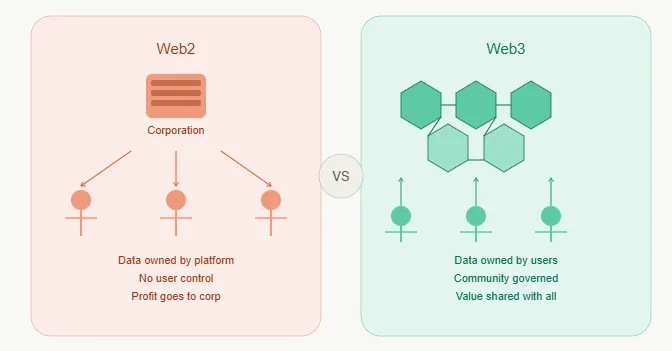
Today’s internet runs on centralized servers owned by corporations. Google stores search data. Meta controls social feeds. Every platform collects personal information and profits from it, and the average user rarely sees much in return.
Web3 changes that setup by running on blockchain technology, where no single entity is in control. Users can own their data, hold digital assets, and vote on how platforms operate. The difference is similar to renting a home versus actually owning a share of the building alongside thousands of others.
Web3 tokens are the digital assets that power this system. They fund transactions, reward network participants, and run decentralized apps, also known as dApps. Web3 crypto projects 2026 have made a clear shift from speculative territory to real utility. The Real World Asset tokenization sub-sector alone crossed thirty billion dollars in market value by mid-2025, and top Web3 tokens now span everything from financial infrastructure to gaming and decentralized storage. The best Web3 crypto projects in 2026 have quietly moved from theory to practice.
Web3 infrastructure projects that power everything else
Every app built in the Web3 space relies on something underneath it. Web3 infrastructure projects are the systems that everything else depends on, and they’re the most consistently used layer of the entire ecosystem.
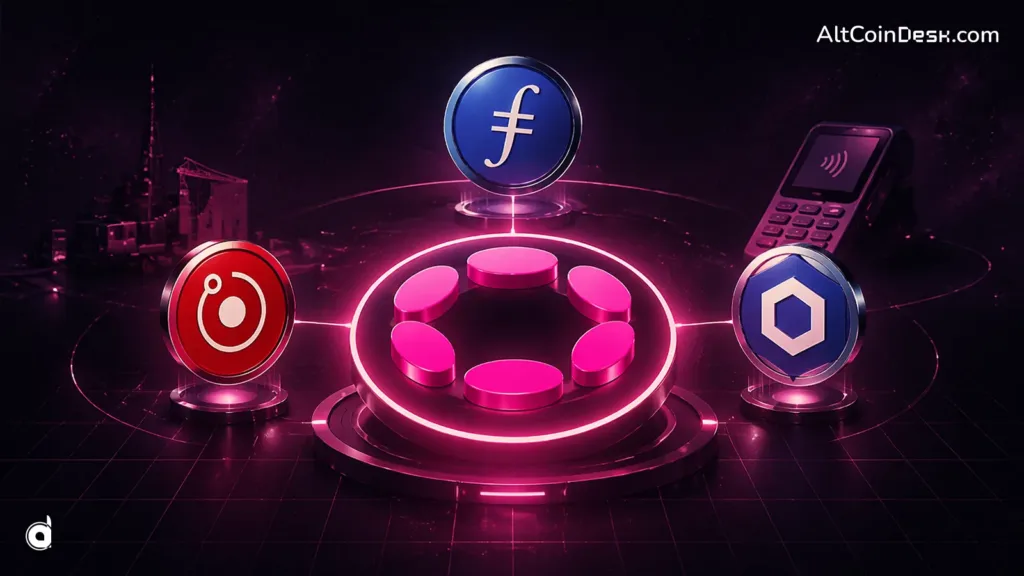
Chainlink (LINK)
Chainlink is an oracle network. Smart contracts run automatically on a blockchain, but they have no built-in way to access real-world data like prices or market conditions. Chainlink feeds them that information.
JPMorgan and UBS are actively running blockchain settlement tests using Chainlink’s infrastructure in 2026. The Bitwise Chainlink ETF (ticker: CLNK) launched on NYSE Arca, making LINK available through retirement accounts. That level of institutional involvement puts Chainlink among the most validated Web3 infrastructure projects in operation today.
Polkadot (DOT)
Different blockchains don’t communicate with each other natively. Polkadot acts as a Layer 0 relay chain connecting multiple blockchains, called parachains, letting them share security and exchange data. As the number of specialized chains grows, this kind of interoperability becomes foundational.
Filecoin (FIL)
Filecoin is decentralized storage. Instead of Amazon or Google holding files on their servers, Filecoin lets anyone rent out spare hard drive space to those who need it. With AI generating enormous volumes of data, demand for a neutral, distributed storage layer has grown considerably heading into 2026.
The Graph (GRT) and Render (RENDER)
The Graph is essentially what makes blockchain data usable. Without it, developers would have to dig through raw on-chain records manually. The Graph indexes that data so apps can pull exactly what they need, fast. Render sits in a different lane entirely, connecting people who need GPU computing power with machines around the world that have it sitting idle. For AI developers and 3D creators, that’s a cheaper and more flexible option than renting from a cloud giant.
These Web3 infrastructure projects don’t always make headlines, but they’re consistently relied on by the projects that do.
Top Web3 tokens beyond infrastructure
Infrastructure isn’t the whole picture. Several tokens have built real ground in decentralized finance and broader blockchain ecosystems, not on hype cycles, but on consistent activity from actual users.
Ethereum (ETH)
Ethereum’s position hasn’t really been threatened, just adapted. The network runs more decentralized apps, NFT platforms, and DeFi products than anything else out there. What changed is cost. Layer 2 networks like Arbitrum and Optimism have made transactions far cheaper, which kept Ethereum relevant as faster chains came along.
Injective
Most DeFi tokens inflate supply over time. Injective works the opposite way, directing a portion of all dApp fees toward buying back and burning tokens, gradually shrinking the total supply. Activity in its ecosystem has grown steadily, making it one of the more consistently active tokens in the DeFi space.
Flare (FLR)
Moving assets between blockchains has always been a weak point in Web3. Bridge protocols have a long history of security failures, and that’s the gap Flare is going after. It offers a fully decentralized way to handle cross-chain functionality, and backs that up with a developer incentive program designed to grow the ecosystem from the ground up.
Web3 gaming tokens: Play, own, earn
Web3 gaming is one of the easiest corners of this space to actually understand. If you’ve spent money on in-game items before and lost them when a game shut down or an account got banned, the appeal here is straightforward. Players own what they earn, and that ownership doesn’t disappear when the developer moves on.
The core difference from traditional gaming is ownership. In a regular game, a purchased item lives on the developer’s servers. If the game shuts down, it’s gone. In Web3 games, items exist as NFTs the player actually owns. They can sell, trade, or move those assets to other compatible platforms.
Some of the best Web3 projects 2026 come from the gaming side. Leading Web3 gaming tokens include:
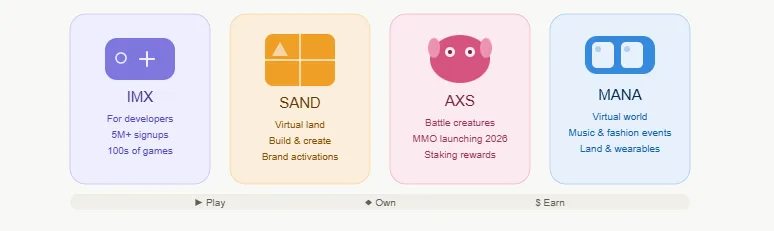
Immutable (IMX)
Most Web3 games don’t fail because the gameplay is bad. They fail because building on blockchain is genuinely complicated, and studios get buried in infrastructure before they ship anything. Immutable exists to take that problem off their plate. The platform now has over five million sign-ups and hundreds of games either live or in the works. It also merged its two separate networks into one earlier this year, something developers had been waiting on for a while.
The Sandbox (SAND)
Users buy plots of virtual land, build their own games and experiences on top, and trade everything they create. Major brands have set up inside the platform, but the creation tools are open to anyone, not just developers or big names.
Axie Infinity (AXS)
One of the earliest blockchain games and still going. A closed playtest for its new MMO, Atia’s Legacy, ran in late 2025, with a full launch expected in 2026. New staking mechanics have kept the existing player base engaged while the bigger release takes shape.
Decentraland (MANA)
A virtual world with its own economy where MANA covers land, wearables, and event access. It regularly hosts music festivals and fashion activations, giving people actual reasons to show up beyond just holding the token.
A fair note on Web3 gaming tokens: 2025 data showed that the large majority of new gaming token launches struggled to hold value after release. The ones performing well in 2026 had established player bases before the token launched, not as a result of it.
Web3 projects for beginners: Where to start
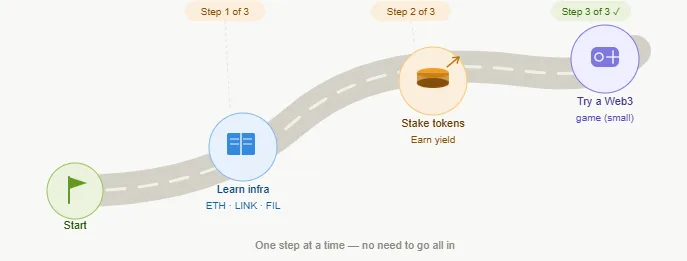
Getting started doesn’t mean going all in. Web3 projects for beginners are best approached one step at a time, starting with what makes sense rather than what’s trending.
The best Web3 projects 2026 share consistent traits: real usage, a clear function, and tokenomics that don’t collapse when new money stops flowing in. Chainlink, Ethereum, and Filecoin fit that description because they’re used by developers and institutions for practical reasons.
Reasonable starting points include:
- Staking tokens on established platforms to earn yield
- Trying a play-to-earn game with a small amount to understand in-game ownership firsthand
- Holding tokens tied to infrastructure projects with documented and growing demand
How to spot the ones actually worth paying attention to
In a space full of noise, the best Web3 projects 2026 are identifiable by one thing: they’re actively being used outside crypto-native circles.
The infrastructure is used by banks. The games have verifiable daily player counts. The storage networks are filling a gap that AI growth has made too significant to ignore. Web3 crypto projects 2026 have reached a point where the credible ones aren’t hard to spot. The best Web3 crypto projects in 2026 aren’t building for crypto enthusiasts alone anymore. The audience keeps growing.