



When you’re holding Bitcoin and need cash, it used to mean one thing: sell. That’s no longer the case. Today, crypto holders can borrow against their assets, keep their position, and defer the tax headache (as long as the loan is repaid and liquidation is avoided). The best crypto loan providers in 2026 make that possible, and the options are better than they’ve ever been.
It works just like a pawn shop. Hand over the crypto as security, walk away with cash, and get it back once the loan’s repaid. No credit check, no selling, no losing the upside.
What crypto lending platforms do
Crypto lending platforms let borrowers use their digital assets as collateral in exchange for cash or a stablecoin like USDC. Nothing gets sold. The crypto is deposited, the platform holds it, and it’s returned once the loan is paid back.
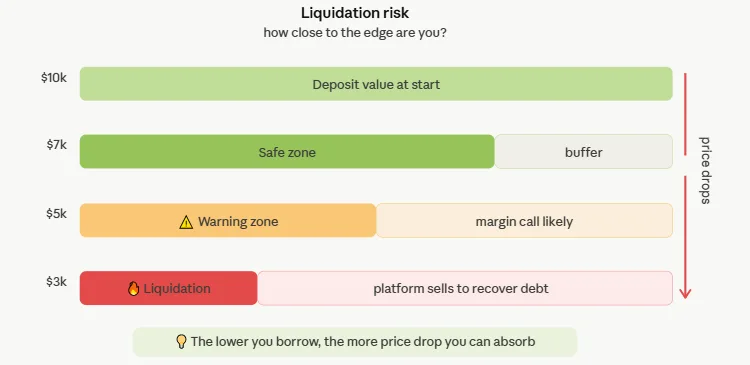
If repayment doesn’t happen, or if the collateral’s value drops too far, the platform sells the crypto to recover what’s owed. That’s called liquidation, and it’s the most important risk to understand before borrowing.
One thing worth knowing upfront: Crypto lending platforms don’t run credit checks. The deposited crypto is the collateral, and that’s the only qualification that matters.
The two types of crypto loan providers
Crypto loan providers fall into two categories, and knowing the difference makes picking the right one a lot easier.
CeFi (centralized finance)
A company manages the platform, verifies identity, holds the collateral, and issues the loan. Think of it like a bank. It’s easy to use and comes with customer support. Coinbase, Nexo, and Ledn sit in this category.
DeFi (decentralized finance)
No company behind it. Rules run through smart contracts on a blockchain, executing automatically with no middleman, no identity check, and no customer service line. Aave and Alchemix are examples.
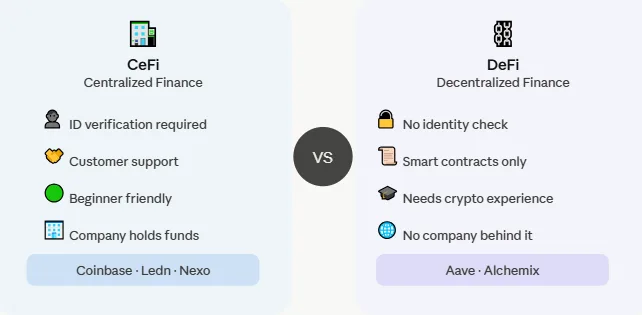
For anyone new to this space, CeFi is the easier starting point. DeFi hands over more control, but it assumes you already know what you’re doing.
Key terms to know before comparing the best crypto loan platforms in 2026
A few terms show up on every platform page. It’s worth knowing them before diving into comparisons so the fine print doesn’t feel like a foreign language.
- LTV (loan-to-value ratio): This is the relationship between what’s deposited and what can be borrowed. Deposit $10,000 in Bitcoin at a 50% LTV, and the borrowing limit is $5,000. Borrowing less than the maximum just means more breathing room if prices turn.
- Liquidation: If the collateral drops far enough, the platform sells it to cover the debt. Alerts usually come first, but crypto doesn’t wait around. Keeping an eye on the position is the borrower’s responsibility, not the platform’s.
- Rehypothecation: Some platforms quietly lend out deposited collateral to other users. Celsius did exactly this before it froze withdrawals in June 2022 and went under shortly after. Most reputable platforms now make a point of being transparent about it.
- APR vs. APY: APR is the simple annual rate. APY includes compounding. Always check which one a platform is quoting, since the difference adds up – a 10% APR compounds to roughly 10.47% APY, which matters on larger loans.
Best crypto loan providers in 2026
Here’s how the top platforms compare right now.
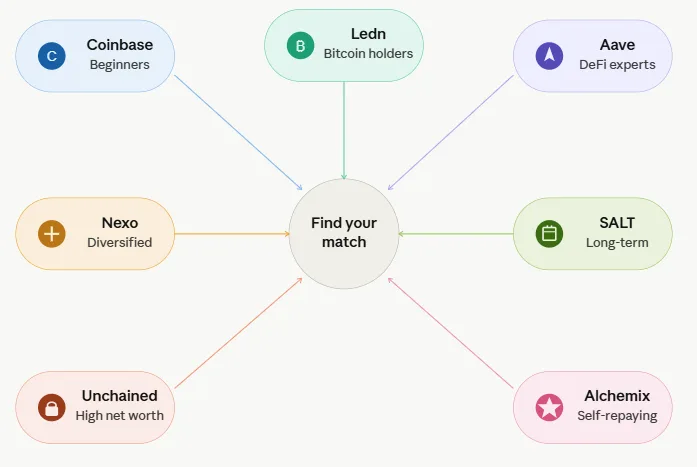
Coinbase: Best for beginners
Coinbase is the most beginner-friendly option on this list. Users can borrow USDC against Bitcoin directly through the app at competitive rates. The loan runs through a DeFi protocol called Morpho in the background, but the experience is clean and straightforward.
There’s no repayment deadline, and the loan can be settled whenever. Not available in New York State. Coinbase sits in CeFi in terms of user experience, though the underlying protocol is DeFi.
Ledn: Best for Bitcoin holders
Ledn is widely considered one of the best crypto loan providers for Bitcoin holders who want to know exactly where their collateral sits. It’s processed billions in loans since 2018 without a single reported loss of client funds, a track record that held through the Celsius, BlockFi, and FTX collapses.
It doesn’t lend out collateral, publishes monthly proof-of-reserves reports, and only liquidates what’s needed to restore the LTV ratio. Rates run higher than DeFi alternatives, but few crypto loan providers come close to its level of transparency.
Aave: Best for experienced DeFi users
Aave is the go-to DeFi option for users who know their way around crypto wallets. It operates across multiple blockchains, requires no identity check, and adjusts rates automatically based on real-time supply and demand.
It doesn’t support native Bitcoin or fiat payouts, so it’s better suited to Ethereum-based borrowers. It’s also one of the most battle-tested protocols in DeFi, having run through multiple market cycles without a major exploit.
Nexo: Best for diversified crypto portfolios
Nexo returned to the US market in 2026 after stepping back due to regulatory uncertainty. It accepts a wide range of cryptocurrencies as collateral and offers instant approval with same-day funding.
Rates are tiered based on how much of the native NEXO token a user holds. The lowest advertised rates are only accessible to those holding that token, so reading the full terms before committing is worth the time. For holders with a spread of different coins, it’s one of the more practical CeFi options around.
Unchained Capital: Best for high-net-worth holders
Unchained Capital splits private keys across three parties using a multi-signature custody model, so no single party can touch the funds alone. That includes Unchained itself.
Loan minimums are high and not all states are covered. For serious Bitcoin holders who prioritize security over speed, it’s one of the better-built options out there.
SALT Lending: Best for long-term borrowers
SALT offers loan terms up to five years, which almost no other crypto lender does. No credit check, available for personal and business borrowers, though only in certain states.
If the goal is borrowing now and repaying slowly without pressure, SALT is one of the few platforms actually designed for that.
Alchemix: Best self-repaying loan option
Alchemix puts deposited crypto to work through yield protocols, and that yield pays down the loan automatically. No payment schedule, no deadlines.
Repayment speed depends entirely on yield rates, so it’s not for anyone in a hurry. It also takes some DeFi comfort to use. But nothing else on this list works quite like it.
Risks worth knowing before taking out crypto loans
The best crypto loans still come with real risks. Knowing them up front just means fewer surprises.
Volatility and liquidation
Crypto moves fast, and a bad week can wipe out a position before there’s time to react. The closer the loan sits to the platform’s LTV limit, the less room there is when prices drop. Borrowing well below the maximum is the simplest buffer against that.
No government protection
There’s no FDIC equivalent for crypto. If a platform fails, recovering funds isn’t guaranteed. The collapses of Celsius, BlockFi, and Voyager in 2022 showed exactly what happens when platforms mix client funds with their own. Always check whether collateral is held in segregated custody before depositing anything.
Smart contract and regulatory risk
DeFi platforms carry smart contract risk. Code bugs or exploits can result in losses with no company to hold responsible. On top of that, regulations around crypto lending are still developing, and policy changes can shift how platforms operate without much warning.
Final thoughts
Crypto loan providers and crypto lending platforms have come a long way since the difficult days of 2022. The platforms operating today are more regulated, more transparent, and more reliable than those that came before.
The right choice among the best crypto loan platforms in 2026 comes down to what someone holds, how much they need, and how much risk they’re comfortable sitting with.
Beginners tend to start with Coinbase. Long-term Bitcoin holders lean toward Ledn. DeFi users gravitate toward Aave. Among the best crypto loan providers available right now, there’s a solid fit for nearly every type of borrower.